

Gravity Rush
Draw the path, solve the physics. Gravity Rush is a puzzle game where every line you sketch becomes ...

Swap neon gems, clear matches of three or more, and chain cascading combos across a glowing 8-by-9 grid. Neon Match is a fast, portrait-first take on the swap-and-match puzzle, tuned for phone screens and short sessions but deep enough to reward careful reading of the board. Line up four gems to forge a blaster that wipes an entire row or column. Build an L or T shape to drop a bomb that detonates a 3-by-3 crater. Chain five in a line to create a prism that vaporises every gem of a chosen colour. Two modes ship on day one: a Daily Puzzle with a shared seeded board and a fixed move budget, and an Endless run that keeps going until the grid locks down or you chase a new personal best. No installs, no accounts, no pay walls — the Daily is the same for everyone who visits that day, and every cascade is computed in the browser so the game is ready the moment the page is.
Neon Match was built to fill the match-three gap in the YoyoArena catalogue. Most of the other originals lean on fast twitch reflexes or real-time survival; match-three sits at the other end of the arcade spectrum and rewards pattern reading, forward planning, and patient chain building. That shift in pace makes it a strong counterweight on the library, because it draws a very different session: shorter mental bursts, one move at a time, ideal for phone screens held in one hand. The first prototype used only three-matches with no specials and no cascade multiplier. Playing it for an afternoon made the problem obvious within minutes — matches felt isolated, and there was no reason to aim for anything bigger than the minimum. The real shape of the game did not show up until specials and the cascade multiplier were added together in the same build.
Cascade scoring was the pivotal change. Once a dropped refill could trigger another match and the multiplier grew across the chain, the best moves stopped being about clearing the biggest visible group and started being about placing gems to set up follow-ups. That shift carried over naturally to special creation. A four-match has always been easy in match-three; the trick was making it feel earned. Line blasters, bombs, and prisms each reward a different shape, so a player who sees rows differently from columns or spots L-shapes before straights gets different tools out of the same board. Swapping two specials together unlocks yet another layer — those combos can clear half the grid at once, and the cascade multiplier that follows turns them into moments worth planning entire sequences around. Players who enjoy the timing pressure in Perfect Shot or the spatial reading in Signal Grid tend to pick up Neon Match fastest, because the same habits — scanning for structure and converting it into a single decisive move — map directly onto the match-three board.
The daily puzzle structure came from the same reasoning as Signal Grid. Match-three as a private solo score chase is fine, but a shared board gives a single day a reason to exist. Everyone plays the same layout, so a player's score reflects reading and planning rather than luck. Endless mode stays available for anyone who finishes the daily and wants another run, and the personal best on that device keeps the long-term score intact even without an account. Both modes run entirely in the browser — the grid, the cascades, and the daily seed all compute on device from the date, so the only thing the game needs is the page.
Draw the path, solve the physics. Gravity Rush is a puzzle game where every line you sketch becomes ...
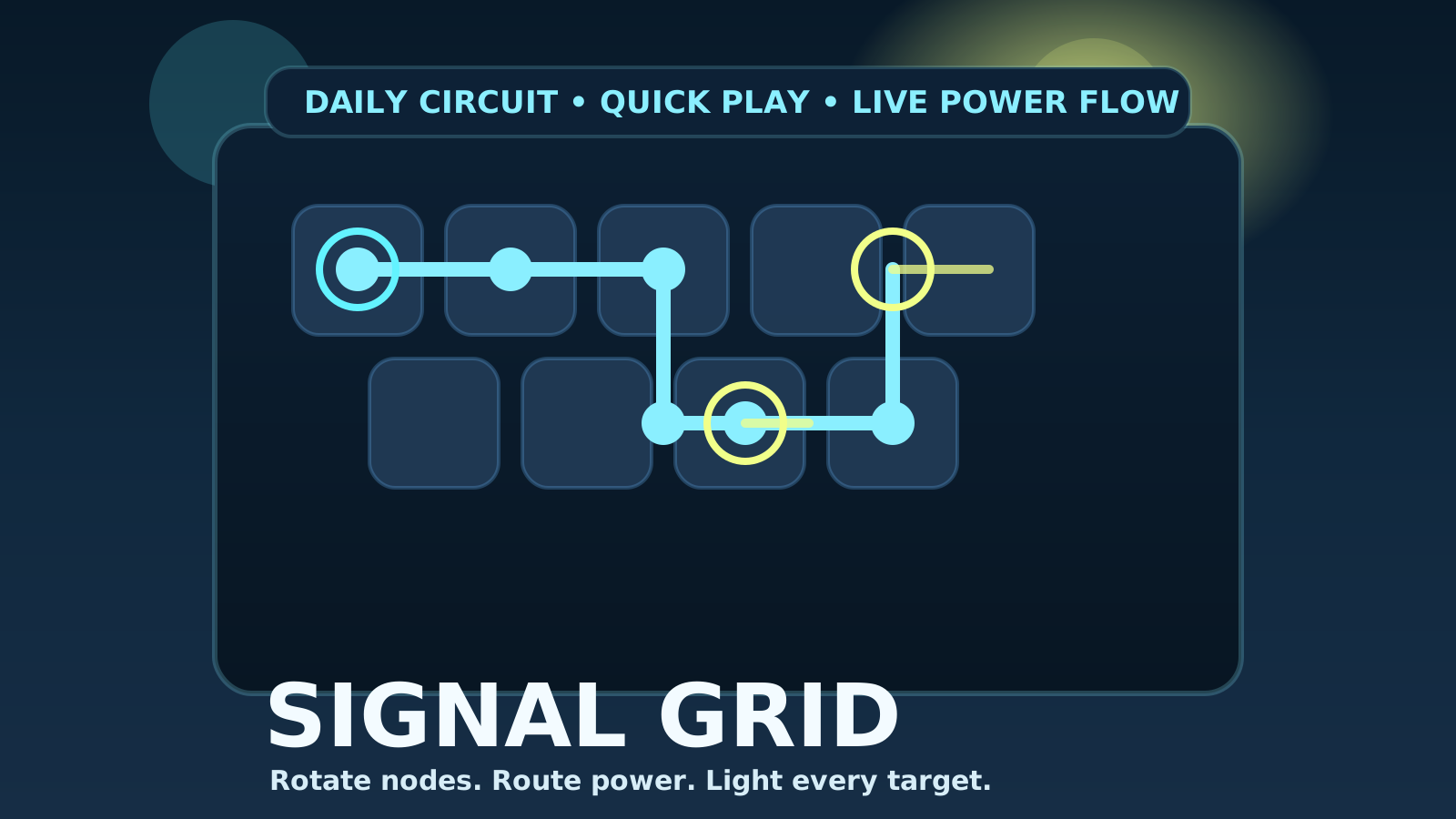
Rotate circuit nodes, route power from the source, and light every target on the board. Signal Grid ...

Cut ropes, drop candy, feed Chompy. Rope Snip is a physics puzzle game built on the elegant satisfac...