Back to Games
Crater Command

Crater Command

Strategy Mobile Friendly

About Crater Command

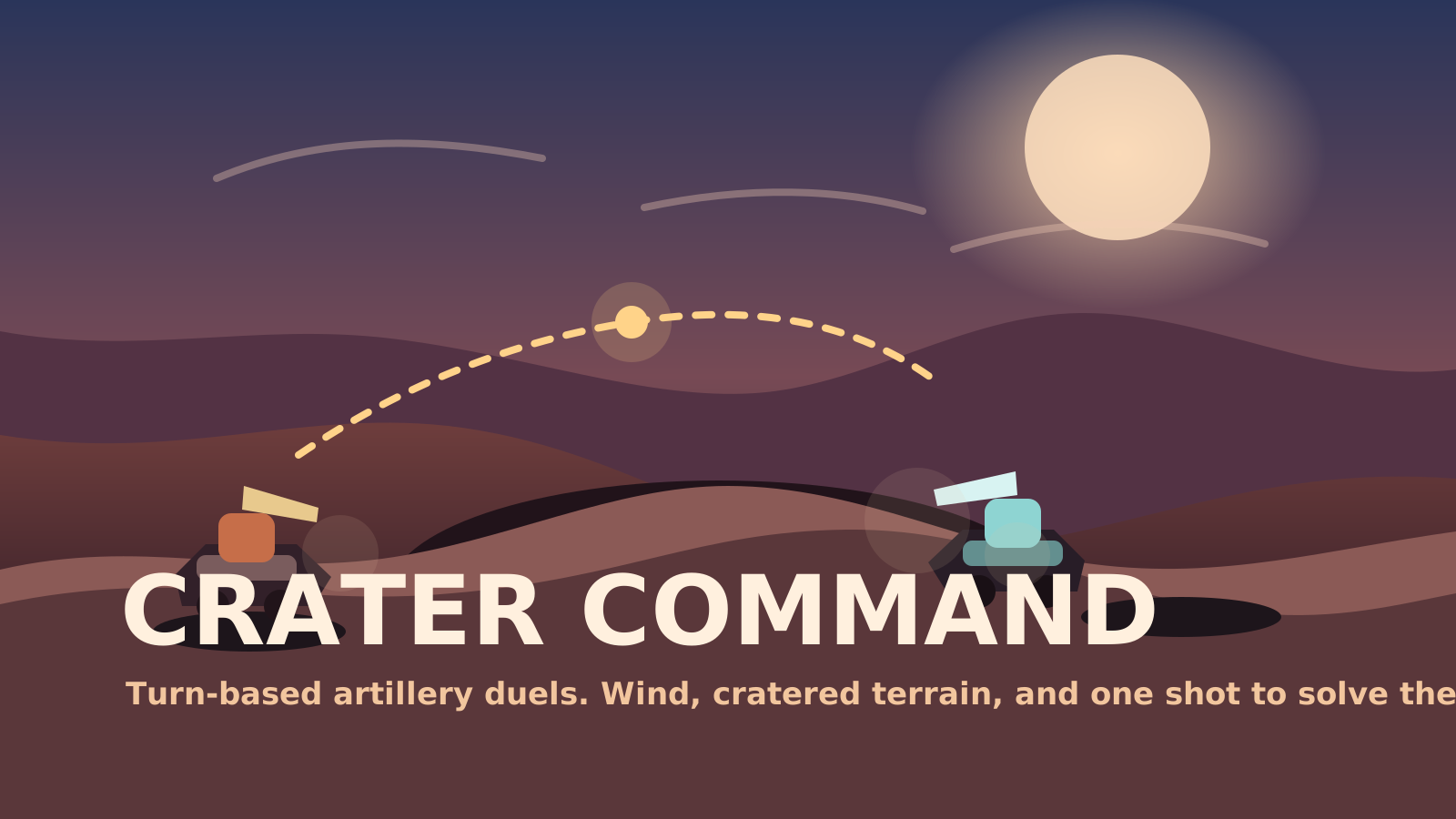
Trade turn-based artillery fire across a destructible crater field and solve each shot before the enemy commander does. Crater Command is a portrait-first browser artillery duel built for touch screens but equally playable on desktop: drag from your tank to set angle and power, release to fire, then watch the shell arc through shifting wind and tear the terrain apart. Four weapon types change the tactical equation. Basic shells reward clean aim, Split Shot breaks into a wider spread, Drill Bombs punch delayed blasts into the earth, and Shock Mines punish tanks that linger in the same landing zone. Every impact changes the next turn. Hills disappear, cover collapses, safe arcs become traps, and a correction that was right one round ago can become completely wrong after a single crater. The result is a short-form strategy game about memory, adjustment, and committing to one shot at a time.

How to Play Crater Command

Controls

  • Aim on mobile: Drag away from your tank, then release to fire.
  • Aim on desktop: Click and drag from your tank, or use Up / Down for angle and Left / Right for power.
  • Fire: Release the drag line, or press Space / Enter.
  • Select weapon: Tap the weapon cards, or press 1, 2, 3, or 4.
  • Pause: Press P or Esc.
  • Fullscreen: Press F.
  • Restart: Press Enter after the duel ends.

Objective

  • Destroy the enemy tank before your own hull reaches zero.
  • Use the wind, terrain shape, and weapon choice to find better firing lines than your opponent.
  • Exploit craters — blowing away cover can be just as valuable as landing a direct hit.

Turn Flow

  • Read the field: Check the wind and the current shape of the terrain before aiming.
  • Commit to a shot: Pick an arc and power value, then fire one weapon.
  • Watch the impact: The terrain updates after every explosion, which creates new lines and removes old cover.
  • Adjust the next turn: Use the previous impact point to correct angle, power, or weapon choice.

Weapons

  • Basic Shell: Reliable direct-fire damage for clean arcs.
  • Split Shot: Breaks into multiple fragments mid-flight to cover a wider area.
  • Drill Bomb: Burrows into the earth and triggers delayed underground blasts.
  • Shock Mine: Plants a timed mine that punishes tanks lingering in the same zone.

What Each Weapon Is For

  • Basic Shell: Your default correction tool when you are learning a new arc or taking a clean finishing shot.
  • Split Shot: Best when your last shell was close but the exact landing point is still uncertain.
  • Drill Bomb: Strong against tanks hiding behind ridges because the delayed underground bursts chew through cover.
  • Shock Mine: Best for controlling a likely landing zone or punishing a tank that keeps correcting in the same area.

Tips & Strategy

  • Read the wind before every shot. Small wind changes matter more on high arcs than low ones.
  • Use terrain as a weapon. A near miss that removes the enemy's hill can set up a much easier next turn.
  • Do not spam special weapons. Split Shot is best when you are close but uncertain; Drill Bomb is best when the enemy is hiding behind a ridge.
  • Low, fast shots are safer in strong wind. A flatter arc gives the wind less time to drag the shell off line.
  • Memorize your last correction. The best next shot usually starts from the angle and power that nearly worked one turn earlier.
  • Misses can still be good turns. If a shell removes the enemy's cover or leaves a mine in a dangerous lane, it can be more valuable than a weak direct hit.
  • Use Basic Shell to calibrate. If the field has changed heavily, re-establish the arc with a simple shell before gambling on Split or Drill.
  • Watch where the crater lip forms. The terrain edge after an explosion often creates a new aiming reference for the next turn.

The Story Behind Crater Command

Crater Command started from a gap in the YoyoArena lineup. Most games on the portal ask for continuous motion, rhythm, or survival under pressure. We wanted one game where the pressure came from stopping, thinking, committing to a single action, and then watching the consequence unfold. Artillery duels solve that naturally. They are readable on small touch screens, they turn every shot into a visible problem of angle and power, and they create a small suspense window between decision and outcome that reflex-driven games do not have.

The destructible battlefield is the real core of the design. Early prototypes used a static hillside, and they worked mechanically, but they were forgettable. The moment we let explosions carve actual craters into the ground, the duel became interesting. A missed shot could still change the match. Removing a ridge, flattening a slope, or opening a direct lane to a tank was often as important as doing damage. That gave every impact strategic value and made the field itself part of the memory game. Players are not just adjusting numbers; they are reading a battlefield they have personally reshaped.

The weapon set was built to stop the game from collapsing into one perfect shell repeated forever. Basic Shell is intentionally the anchor because a tactics game needs one reliable baseline. Split Shot exists for uncertain ranges where being almost right should still matter. Drill Bomb was introduced after tests showed that a single tall ridge could make duels too static for too long. Shock Mine was added last, once we realized the game needed at least one weapon that controlled future space rather than only current space. Together they turn the duel into more than just arithmetic.

We also kept the structure short on purpose. There are no sprawling campaigns, upgrade trees, or twenty-minute matches here. Crater Command is designed for rapid rematches: one battlefield, one opponent, one wind reading at a time. That makes it a useful counterweight to faster survival games on the portal like Rollout and Trench Dive, while still feeling like a genuine strategy game instead of a reflex game in disguise.

Frequently Asked Questions

Is Crater Command turn-based?
Yes. You and the enemy commander take alternating shots. The battlefield updates after every impact, then the next turn begins.
Can I play Crater Command on mobile?
Yes. The game is designed for portrait touch screens first. Drag from your tank to aim and release to fire.
Does the terrain actually change?
Yes. Explosions dig craters into the ground, remove cover, and create new angles for later turns.
Which weapon should beginners use most?
Start with Basic Shell. It teaches the core angle-and-power rhythm. Use Split Shot when you are close, Drill Bomb against cover, and Shock Mine when you want to control space.
How much does wind matter?
Wind matters on every turn, but it matters most on high arcs. A strong wind can drag a shell far off line if the projectile stays airborne long enough. Low, fast shots are less affected.
Does the enemy cheat?
No. The enemy uses the same battlefield, the same wind, and the same weapon rules you do. It can still make strong shots, but it is not ignoring physics or reading hidden information.
Can a match end in a draw?
Yes. If both tanks are destroyed by the same chain of explosions, the duel is scored as mutual destruction rather than forcing an arbitrary winner.
Does Crater Command save progress?
The game stores your best round locally in your browser so you can track improvement across rematches on the same device.
Is Crater Command free?
Yes. Crater Command is free to play in your browser with no install and no unlock gate.

Tags

Strategy Artillery Turn-Based Physics Destructible Terrain Tanks Mobile Strategy Duel